
Manjarite and Siaba: Where Is the Calm Snorkelling in Komodo?

al ghifari
August 1, 2026
7 min read
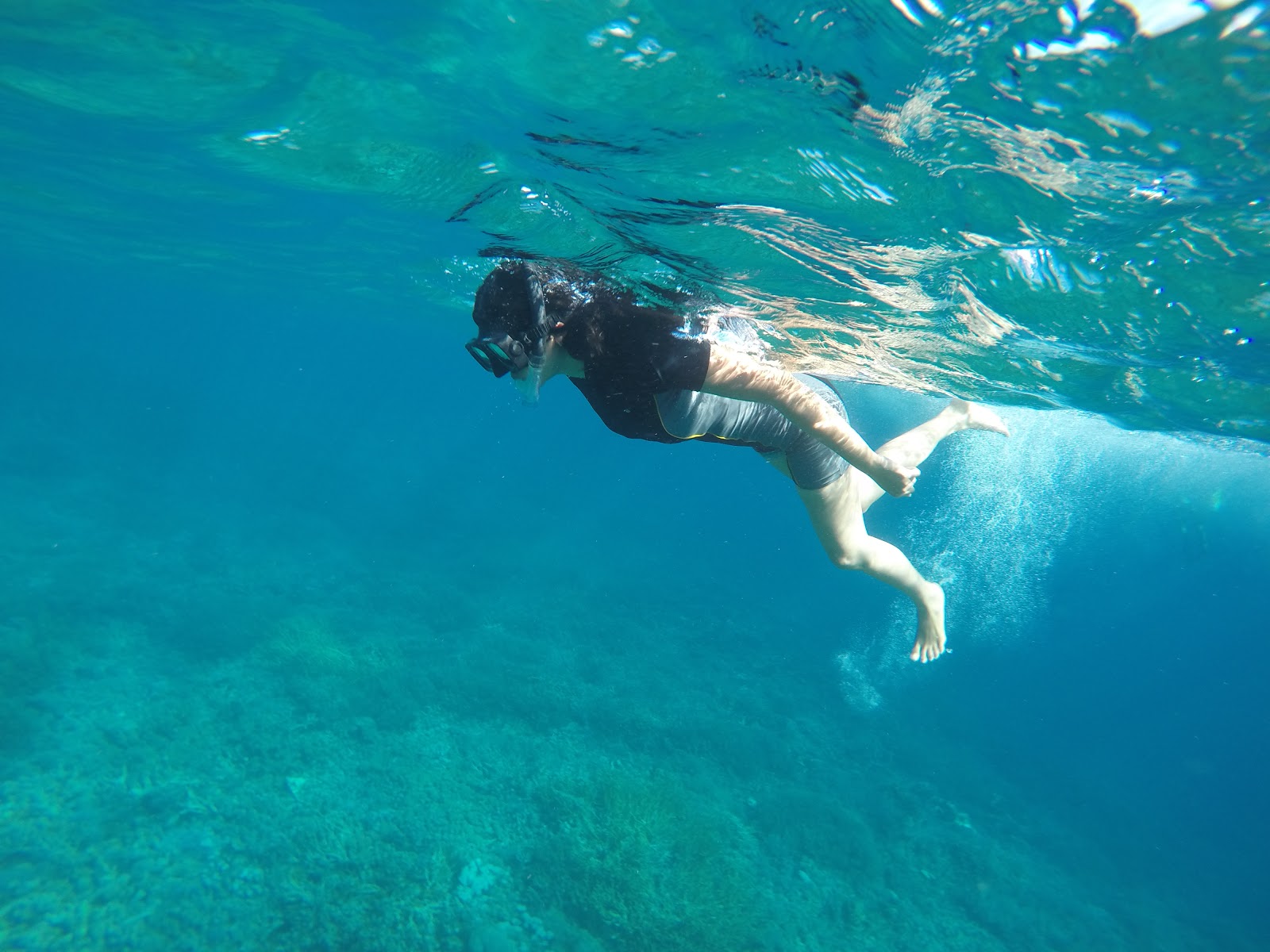
The calm snorkelling in Komodo is in the sheltered bays, not the famous channels. Siaba Besar runs 5–18 m over a sheltered bay with light to moderate current and a sand bottom around 20 m; Manjarite is a protected reef slope used as the first proper snorkel of most 3D2N trips. Both are beginner-friendly, and both sit on the standard route.
Komodo’s reputation is built on current: shotgun channels, drift dives, reef hooks. That reputation frightens off exactly the people who would enjoy the park most — families, non-divers, nervous swimmers — and it is misleading, because the same geography that accelerates water through the straits creates dead-calm water behind the headlands. The route already stops at those places. You just have to know which ones they are.
The calm sites on a standard itinerary
| Site | Depth range | Current | Suitable for | What you see |
|---|---|---|---|---|
| Siaba Besar / Turtle City | 5–18 m, sand at about 20 m | Light to moderate, sheltered bay | Beginners; used as the check-dive and night-dive site | Green turtles, macro life, easy reef |
| Manjarite | Shallow reef slope | Sheltered | Beginners and first-time snorkellers | Hard and soft coral slope, reef fish |
| Pink Beach (in-water) | 5–20 m | Light to moderate | All levels | Shallow coral garden, anthias, turtles |
| Sebayur | 5–30 m+ (stronger at the point) | Light to moderate | Beginner to intermediate | Soft coral garden, reef fish |
| Kanawa house reef | Shallow to moderate | Light in the lee | All levels, easy shore entry | Reef flat and drop-off, good first snorkel |
Depth and current profiles compiled from operator dive briefings for the region. Conditions change with tide and wind; the crew’s briefing on the day overrides any table.
And the sites to skip if calm water is the point
| Site | Current rating | Why it is not a calm snorkel |
|---|---|---|
| Batu Bolong | Strong (3–4 of 5), constant | Pinnacle in open flow; advanced divers only |
| Castle Rock | Very strong (5 of 5) | Negative entry, reef hook, advanced certification |
| Crystal Rock | Strong (4–5 of 5) | Exposed pinnacle |
| Tatawa Kecil | Very strong, down-current risk | Intermediate to advanced divers |
| Shotgun / The Cauldron | Very strong (4–5 of 5) | Channel effect; advanced only |
| Karang Makassar (Manta Point) | Gentle to moderate drift | Fine for confident snorkellers, but it is a drift — you move, the reef does not |
Why Siaba is where crews put nervous swimmers
Siaba Besar is a broad, protected bay. The reef runs from about five metres down to eighteen, with sand beyond it around twenty, and the water inside the bay is usually flat enough that a tender can sit beside a group the whole time. Dive operations use it as a check-dive site and for night dives precisely because nothing there is demanding. For snorkellers it means you can float over turtles in chest-deep water without ever being carried anywhere.
Manjarite: the stop that sets the tone
Manjarite falls on day 1, between Kelor and the Kalong anchorage, and it is deliberately placed. It is the first time most guests get in the water on the trip, and it is sheltered enough that a bad first experience is unlikely. Crews use it to check who is comfortable, who needs a float vest and who should be on a line at the more open stops on day 2. If you are anxious about the water, say so at Manjarite rather than at Karang Makassar the next afternoon.
Practical points for calm-water snorkelling
- Water temperature in the north and centre of the park runs about 26–29 °C — a rash guard is for sun and stings, not warmth.
- Visibility in the north and centre is typically 15–30 m; the southern sites run 10–20 m and colder because of Indian Ocean upwelling between June and September.
- Ask for a float vest without embarrassment. On a decent boat roughly a third of guests use one at some point.
- Full-face masks are discouraged by most crews; a standard mask and snorkel is easier to clear.
- Get in at the tender, not off the stern, when there is any flow — you start upstream of where you want to be.
Frequently asked questions
Where is the calmest snorkelling in Komodo?
Siaba Besar, a sheltered bay running 5–18 m with sand around 20 m and light to moderate current, is the calmest site on the standard route. Manjarite, Kanawa’s house reef and the Pink Beach shallows are the other easy options.
Is Komodo snorkelling too rough for beginners?
Not if you pick the sites. The park’s reputation comes from channel dives like Batu Bolong, Castle Rock and the Cauldron, which are advanced diving sites. The bays behind the headlands are calm and are already on the itinerary.
What is Turtle City in Komodo?
It is the common name for the Siaba Besar snorkel and dive area, used because green turtles are reliably seen there. The bay is shallow, sheltered and used by dive operations as a check-dive and night-dive site.
How warm is the water for snorkelling in Komodo?
About 26–29 °C in the north and centre of the park. The southern sites drop to roughly 21–25 °C during the June–September upwelling, which is one reason snorkelling itineraries stay north and central.
Can non-swimmers join the snorkel stops?
Yes, with a float vest and a crew member in the water. Manjarite on day 1 is the site crews use to check who needs support before the more open stops on day 2.
Read next on this site
- Kanawa and Sebayur: reef condition and snorkel depths
- Kelor Island: the first stop explained
- Is Komodo good for non-swimmers?
Getting a written 2027 quote
Tell us the swimming ability in your group and we will mark the stops that suit it. Departures, cabin plans and current rate sheets for this route are handled by Komodo Luxury, the Labuan Bajo operator behind this vessel since 2015. Send your dates, group size and whether anyone in the group dives, and you get a written quote with the inclusion list and the park-fee treatment stated line by line. Reach the reservations desk on WhatsApp +62 811 9941 919 or at sales@indonesiajuara.asia.
Park fees quoted per PP 36/2024 as socialised by Balai Taman Nasional Komodo. Price bands are market reference ranges compiled from active operator listings and network-published rates on 1 August 2026 — they are not quotations, and they move with season, fuel and exchange rate. Ask for a written quote before transferring a deposit.