
Can You See Komodo Dragons in the Wild Safely?

al ghifari
August 1, 2026
8 min read
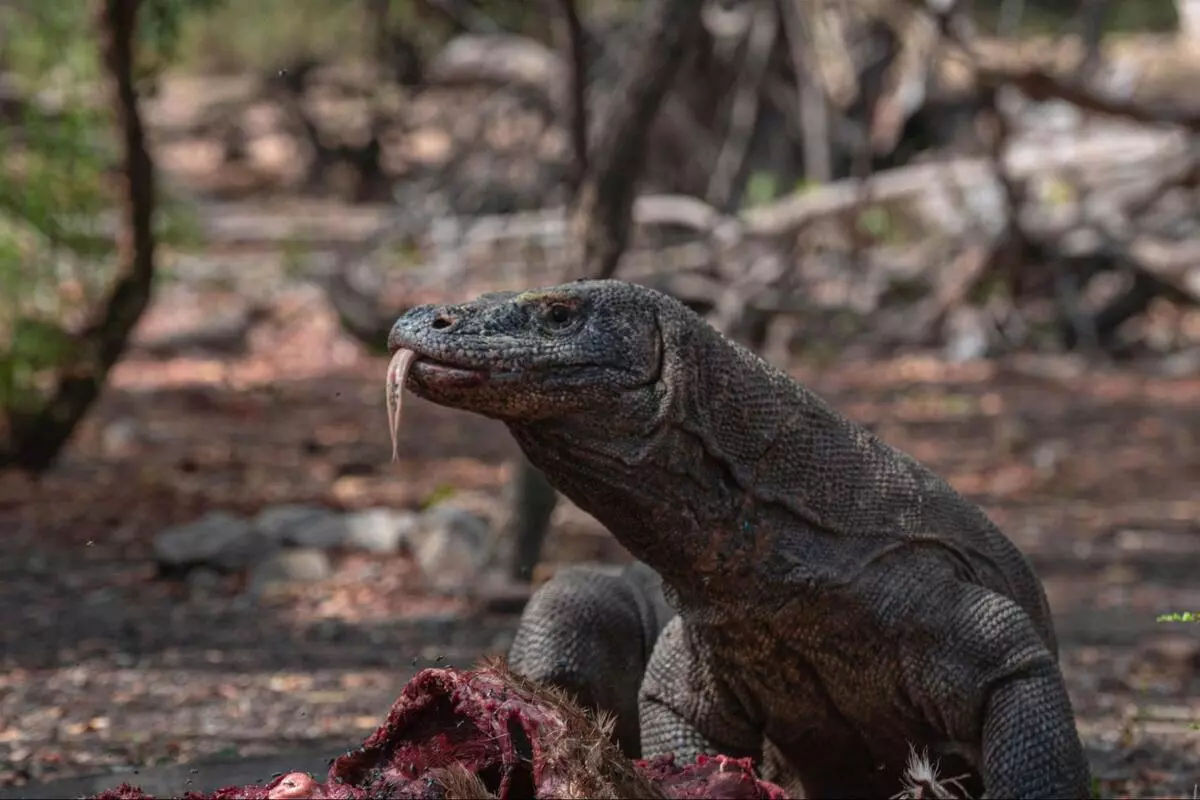
Yes, and it is the normal way to do it. Komodo dragons are seen on ranger-escorted trails on Rinca and Komodo Island, where a ranger with a forked stick is compulsory, groups are kept together and a working distance of several metres is maintained. Attacks on visitors are rare, and every documented case involves someone away from the group or the trail.
The dragon is a genuinely dangerous animal — up to three metres, with a bite that combines serrated teeth and anticoagulant venom — and pretending otherwise helps nobody. What makes the trek safe is not that the animal is tame. It is that the park runs a strict escort system and the rules are simple enough to follow.
How the escort system works
| Element | How it works on the trail |
|---|---|
| Ranger ratio | A ranger leads and a second closes the group; larger groups get more |
| Group size | Kept small and together — you do not walk ahead or lag behind |
| Working distance | Several metres from any resting animal; rangers extend it near a kill or a nest |
| The forked stick | Used to redirect an approaching animal, not as a weapon |
| Trail choice | Short, medium or long loop, chosen at the start according to group and heat |
| Nesting season | Rangers widen distances and reroute around active nests |
Ranger practice as briefed on the Rinca and Komodo trails; the service is operator- or park-collected, typically IDR 80,000–200,000 per group, and is separate from the PP 36/2024 entry ticket.
The rules that actually matter
- Stay with the group and behind the lead ranger. This single rule covers most of the risk.
- No running. Movement away from the group triggers pursuit behaviour; dragons sprint faster than you over short distances.
- Tell the ranger if you have an open wound. Blood is the strongest attractant and rangers will adjust the route.
- Menstruating visitors should inform the ranger discreetly — this is standard park guidance, not superstition.
- No food on the trail, and nothing scented left open in a bag.
- Do not crouch to photograph at eye level with an unsupervised animal between you and the group.
- Small children stay in the middle of the group, holding an adult’s hand.
Rinca or Komodo Island: which is safer?
Neither is meaningfully safer — the escort protocol is the same. What differs is the walk. Rinca is closer to Labuan Bajo, has shorter, more open trails and a higher density of animals around the ranger station, which is why sightings there feel more reliable on a short visit. Komodo Island has longer, hotter trails through more varied terrain and a stronger sense of wilderness. Guests with limited mobility, small children or a tight schedule generally do better on Rinca.
How likely are you to see one?
High on either island during ranger hours, but not guaranteed — this is wild habitat, not an enclosure. Dragons are most visible in the cooler parts of the day and cluster near the ranger stations and water. In the hottest hours they lie up in shade and you may walk a full loop with two or three sightings rather than a dozen. Operators who promise a specific number of animals are selling something they do not control.
What to wear and carry
| Item | Why |
|---|---|
| Closed shoes with grip | Loose, dusty trail; open sandals are refused by some rangers |
| Long, light trousers | Dry scrub, low thorns, sun exposure |
| 1 litre of water per person | No water on the trail; the loops run 30–120 minutes |
| Hat and sunscreen | Very little shade, particularly on Rinca |
| Camera with a zoom | The safest close-up is an optical one |
| Nothing scented or edible in an open bag | Attractant |
The honest risk statement
Incidents involving visitors are rare and have overwhelmingly involved people separated from a group, off-trail, or interacting with an animal directly. Park staff and local villagers, who spend far more hours in dragon habitat than any visitor, account for most recorded bites. Follow the ranger and the trek is one of the more controlled wildlife encounters available anywhere in Southeast Asia.
Frequently asked questions
Is it safe to see Komodo dragons in the wild?
Yes, on the ranger-escorted trails. A ranger with a forked stick leads every group, a working distance of several metres is kept from resting animals, and documented incidents almost always involve someone off-trail or separated from the group.
Do you have to have a ranger to see Komodo dragons?
Yes. A ranger escort is compulsory on the trails on both Rinca and Komodo Island. The service is typically IDR 80,000–200,000 per group and is collected separately from the PP 36/2024 entry ticket.
How close do you get to a Komodo dragon?
Several metres under normal conditions, extended by the ranger near a kill, a nest or an animal that is moving. The forked stick is used to redirect an approaching dragon, not to fight one.
Are you guaranteed to see a dragon?
No. This is wild habitat. Sightings are common during ranger hours, especially near the stations and in cooler parts of the day, but in the midday heat animals lie up in shade. Any operator promising a number is overselling.
Is Rinca or Komodo Island safer for the trek?
The protocol is identical, so neither is meaningfully safer. Rinca has shorter, more open trails and reliable sightings near the station, which suits families and tighter schedules; Komodo Island offers longer, hotter walks.
Read next on this site
- Rinca vs Komodo Island for dragon trekking
- 3 Island Liveaboard FAQ hub 2027
- What’s the cheapest way to see Komodo dragons without a big group tour?
Getting a written 2027 quote
Tell us who is in the group and we will recommend Rinca or Komodo Island for the trek. Departures, cabin plans and current rate sheets for this route are handled by Komodo Luxury, the Labuan Bajo operator behind this vessel since 2015. Send your dates, group size and whether anyone in the group dives, and you get a written quote with the inclusion list and the park-fee treatment stated line by line. Reach the reservations desk on WhatsApp +62 811 9941 919 or at sales@indonesiajuara.asia.
Park fees quoted per PP 36/2024 as socialised by Balai Taman Nasional Komodo. Price bands are market reference ranges compiled from active operator listings and network-published rates on 1 August 2026 — they are not quotations, and they move with season, fuel and exchange rate. Ask for a written quote before transferring a deposit.