Komodo 3 Island Liveaboard for Beginners: What to Pack, Expected Costs, and Advanced Diver Certification Needs

November 10, 2025
8 min read
Komodo 3 Island Liveaboard offers private yacht and phinisi charters in East Indonesia, focusing on Komodo, Rinca, and Padar. These 3-island safaris are a small but high-value niche within Indonesian dive tourism, with dozens of vessels offering short-trip packages generally USD 600–1,600 per person through 2027.
Komodo 3 Island Liveaboard for Beginners: What to Pack, Expected Costs, and Advanced Diver Certification Needs
Komodo 3 Island Liveaboard specialises in private charters across the Komodo National Park, focusing on the iconic islands of Komodo, Rinca, and Padar. This guide provides essential information for beginners, covering packing, costs, and diving certifications required for a successful liveaboard experience.
Understanding the Komodo Liveaboard Market
The Komodo liveaboard market, particularly for 3-island safaris, is a distinct segment within Indonesian dive tourism. While direct audited figures for “Komodo 3-island liveaboard” are not published, the market is tracked as Komodo liveaboard diving within broader marine tourism statistics. This niche is characterised by high demand and constrained capacity, leading to high occupancy and rising yields.
Vessel Numbers and Capacity
There are approximately 61 liveaboards operating in Komodo, Indonesia. Most of these vessels offer 3- to 7-day safaris that include Komodo, Rinca, and Padar as core itineraries. Typical Komodo boats carry 10–16 guests; for example, Scuba Republic caps one vessel at 14 guests. Many operators run close to year-round, with peak season trips (July–August) and manta season bookings often made 12 or more months in advance.
Annual Capacity and Traveler Volume
Based on an inference that approximately 40 of the 61 boats regularly run 3- to 4-night “3-island” itineraries, with an average of 12 guests per trip and 80–120 such trips per boat annually, the estimated annual 3-island liveaboard capacity is on the order of 40,000–60,000 guest-nights. This corresponds to an estimated 10,000–15,000 individual travellers, depending on trip length. This is an estimate based on capacity and should be considered directional.
2027 Note: Growth Dynamics and Visitor Caps
From April 2026, a strict daily cap of 1,000 visitors will be enforced across Komodo’s core zones. This makes early liveaboard booking essential for trips extending into 2027. The market is expected to see continued growth into 2027, supported by strong international dive demand, but this growth will be characterised by high occupancy and rising yields rather than large volume expansion due to park quotas.
Expected Costs for a Komodo 3 Island Liveaboard
Komodo 3 Island Liveaboard packages are generally priced per person. Day-rates typically range from USD 220–550 per person. Short-trip packages, usually 3-4 nights, are approximately USD 600–1,600 per person through 2027. These costs usually include accommodation, meals, diving, and guided excursions. Additional costs may include:
- Flights to and from Labuan Bajo (the main access point).
- National Park fees (variable, check current rates).
- Rental equipment (if not bringing your own).
- Alcoholic beverages and soft drinks beyond standard provisions.
- Crew tips.
- Travel insurance.
It is advisable to clarify all inclusions and exclusions with your charter operator when booking.
What to Pack for Your Komodo 3 Island Liveaboard
Packing for a liveaboard requires careful consideration to ensure comfort and preparedness for both land and water activities. Here is a comprehensive packing list:
Essential Documents and Personal Items
- Passport and visa (if required).
- Dive certification cards (PADI, SSI, etc.).
- Travel insurance details.
- Prescription medications and a basic first-aid kit.
- Sunscreen (reef-safe recommended).
- Insect repellent.
- Personal toiletries.
- Small backpack for land excursions.
Clothing
- Lightweight, breathable clothing (t-shirts, shorts).
- Swimwear (multiple sets).
- Long-sleeved shirt and trousers for sun protection and evenings.
- Light jacket or hoodie for cooler evenings.
- Hat and sunglasses.
- Comfortable walking shoes or sandals for land excursions (e.g., Komodo Dragon trekking).
- Flip-flops or deck shoes for onboard.
Dive and Snorkel Gear (if applicable)
While some gear can be rented, bringing your own ensures comfort and familiarity.
- Mask, snorkel, and fins.
- Wetsuit (3mm shorty or full suit, depending on personal preference and water temperature).
- Dive computer.
- BCD (Buoyancy Control Device).
- Regulator.
- Reef hook (optional, for strong currents).
- Dive torch (for night dives, if offered).
- Surface Marker Buoy (SMB) and whistle.
Consult with your liveaboard operator regarding rental availability and specific gear recommendations.
Photography and Electronics
- Underwater camera with appropriate housing.
- Extra batteries and memory cards.
- Power bank.
- Universal travel adapter.
- Charging cables for all devices.
Advanced Diver Certification Needs
Komodo offers diverse diving experiences, from gentle drifts to stronger currents. While Open Water Diver certification is sufficient for many sites, certain areas within Komodo National Park are better suited for advanced divers due to currents and depth. For beginners, it is important to understand the typical requirements:
Minimum Certification
Most liveaboard operators require a minimum of Open Water Diver certification for participation in diving activities. This allows access to a wide range of dive sites with depths typically up to 18 meters.
Recommended Advanced Certifications
For a more comprehensive Komodo diving experience, particularly at sites known for stronger currents or deeper profiles, an Advanced Open Water Diver (AOWD) certification is highly recommended. This certification typically includes training in:
- Deep Diving (up to 30 meters).
- Drift Diving.
- Underwater Navigation.
These specialties are particularly beneficial in Komodo, where conditions can vary significantly between sites. Some operators may also recommend or require a minimum number of logged dives (e.g., 20-50 dives) for certain itineraries or specific dive sites.
Specialty Courses
Consider taking a Nitrox certification course if you plan to do multiple dives daily. Nitrox allows for longer bottom times and shorter surface intervals, enhancing the overall dive experience. Additionally, a marine life identification course can enrich your understanding of Komodo’s rich biodiversity.
| Certification Level | Typical Depth Limit | Suitability for Komodo | Key Skills Acquired (Relevant to Komodo) |
|---|---|---|---|
| Open Water Diver | 18 meters | Entry-level access to many sites | Basic diving skills, buoyancy control |
| Advanced Open Water Diver | 30 meters | Highly recommended for varied conditions | Deep diving, drift diving, navigation |
| Nitrox Diver (Specialty) | Dependent on mix | Beneficial for multiple daily dives | Extended bottom times, reduced surface intervals |
Always communicate your certification level and dive experience to your liveaboard operator when booking. They can advise on the most suitable itinerary and any additional training that might enhance your trip.
Booking Your Komodo 3 Island Liveaboard
2. Selecting the Right Komodo 3 Island Liveaboard
Choosing a Komodo 3 Island Liveaboard involves understanding the specific needs of your group, are a couple, a family, a dive group, or a corporate charter. The market, while high-value, offers various vessel types and service levels, impacting both experience and cost.
Consider the following factors when making your selection:
- Vessel Type: Options range from traditional phinisi yachts to modern motor yachts. Phinisis offer a classic Indonesian sailing experience, while motor yachts often provide more contemporary amenities and faster transit times.
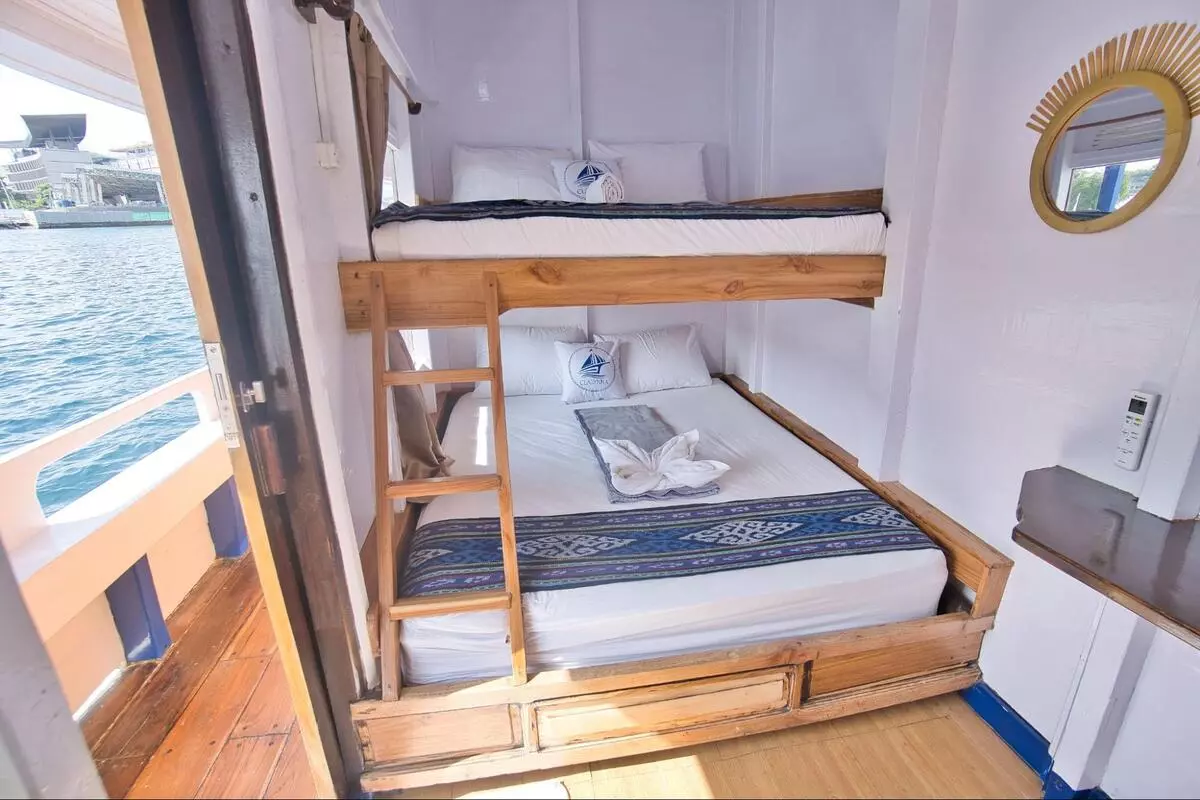
- Cabin Configuration: For couples, private cabins with en-suite bathrooms are standard. Families or dive groups may require vessels with flexible cabin arrangements, such as bunk beds or connecting rooms, to accommodate different group sizes and dynamics. Corporate charters might prioritise vessels with dedicated common areas for meetings or presentations.
- Diving Facilities: Dive groups should scrutinise compressor capacity, dive deck size, equipment rental options, and the number of dive guides per guest. Ensure the vessel supports the desired number of daily dives and offers appropriate safety protocols for all certification levels.
- Catering and Dietary Requirements: All liveaboards provide full board. Confirm their ability to cater to specific dietary restrictions or preferences, which is particularly important for families with children or corporate groups with diverse needs.
- Crew-to-Guest Ratio: A higher crew-to-guest ratio generally indicates a more personalised service level. This can be a significant factor for corporate charters seeking dedicated support or for families requiring additional assistance.
3. Typical Itinerary and Activities on a 3 Island Liveaboard
A Komodo 3 Island Liveaboard typically focuses on the core islands of Komodo, Rinca, and Padar, often accessed via Bali. These itineraries are designed to offer a balanced experience of wildlife encounters, scenic views, and marine activities.
While specific schedules vary by operator, a common structure includes:
- Komodo Island: This is the primary destination for viewing Komodo dragons in their natural habitat. Guided treks are conducted by park rangers, offering insights into the dragons’ behaviour and the island’s ecosystem.
- Rinca Island: Another key location for Komodo dragon sightings, often providing different viewing opportunities compared to Komodo Island due to varying terrain and vegetation.
- Padar Island: Famous for its panoramic viewpoints, offering iconic vistas of three distinct beaches (white, pink, and black sand) converging. A hike to the summit is a standard activity, typically undertaken in the morning or late afternoon for optimal light and cooler temperatures.
- Marine Activities:
- Diving and Snorkelling: The Komodo National Park is renowned for its rich marine biodiversity. Liveaboards will visit multiple dive and snorkel sites, including those known for manta rays, reef sharks, and vibrant coral gardens. Sites are chosen based on conditions and guest experience levels.
- Beach Visits: Opportunities for relaxing on pristine beaches, including the famous Pink Beach, where the sand gets its hue from microscopic red corals.
- Sunset Views: Many itineraries include designated spots for enjoying sunsets over the archipelago.
Trips typically range from 3 to 7 days, with 3-night/4-day packages being common for the core 3-island experience. Operators will provide a detailed itinerary upon booking, outlining daily activities and expected locations.
Booking in advance is crucial, especially given the strict visitor caps and high demand. Private charters offer flexibility and a tailored experience, ideal for couples, families, dive groups, and corporate charters. For a bespoke Komodo 3 Island Liveaboard experience, you may request a charter quote on WhatsApp.
Continue reading: Komodo 3 Island Liveaboard Trend Report 2027: The Shift Toward Remote Southern Manta Sites and Serene North-Central Dives · Komodo 3 Island Liveaboard Trends 2027: Understanding New Visitor Quotas and Remote Manta Site Access · Safety Crew