
Taka Makassar: Will the Sandbar Be Above Water When You Arrive?

al ghifari
August 1, 2026
8 min read
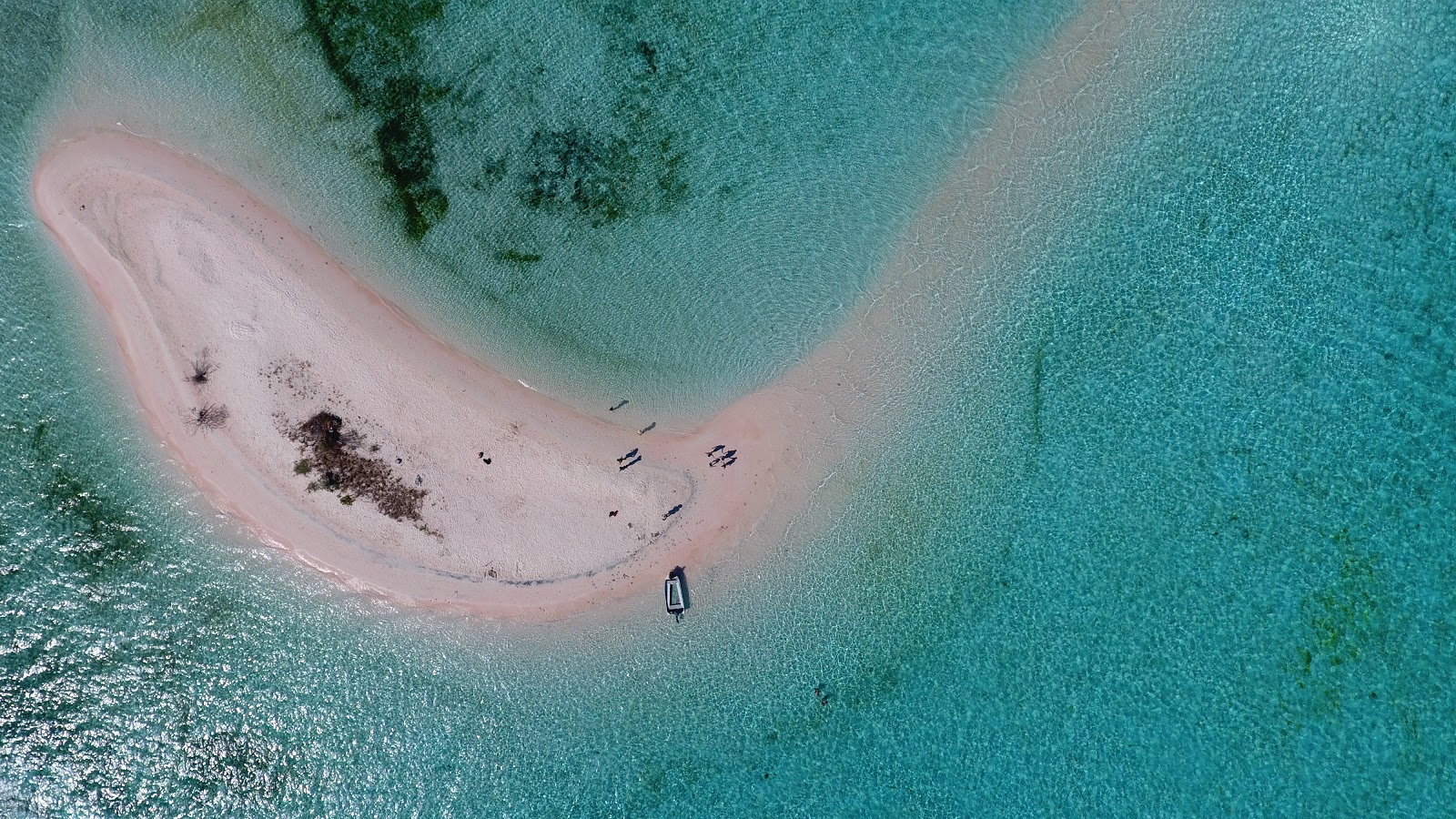
Sometimes. Taka Makassar is a crescent sandbar with no permanent land above the tide line, so whether you walk on it depends on the water level at the hour your boat arrives. On a low or falling tide it is a clean sand crescent; near high water it is a pale patch under half a metre of sea. Crews read the tide the night before and swap it with the Manta Point stop accordingly.
Taka is the Indonesian word for a shallow reef or shoal, and that is exactly what this is: the exposed top of a reef flat in the central strait, a few minutes from Karang Makassar. It photographs like a private island and behaves like a tide gauge. Nothing about it is fixed, which is why itineraries list it and honest crews describe it as conditional.
What you get at each tide state
| Tide state | What the sandbar looks like | Can you land? | Snorkelling on the edge |
|---|---|---|---|
| Low water | Widest crescent, dry sand, clear edge into turquoise | Yes, comfortably | Shallow, bright, gentle |
| Falling to mid | Crescent shrinking but walkable | Yes | Best combination of light and flow |
| Mid to rising | Ankle to knee deep, shape still readable | Standing, not strolling | Good |
| High water | Submerged, visible only as a pale patch from the deck | No | Fine, but the bar itself is gone |
| Spring tide, near full or new moon | Larger swing both ways — the widest lows and the deepest highs | Depends entirely on the hour | Stronger flow; crews shorten the stop |
Tide state is the single variable. There is no published landing ban for Taka Makassar in the sources we can verify, and none of our departures has been refused access — but its availability is physical, not administrative.
Why the stop keeps swapping with Manta Point
Karang Makassar — the shallow manta area most itineraries call Manta Point — and Taka Makassar are 20 to 30 minutes apart, the shortest leg on the whole route. That closeness is what lets a crew reorder them at breakfast. The manta drift works best with some flow; the sandbar works best on lower water. When both cannot be optimal, the crew picks the one that will be better and does the other anyway. If your itinerary lists them in a fixed order and the crew changes it, that is the tide talking.
What actually makes the photograph
| Factor | Best condition | Why |
|---|---|---|
| Tide | Low or falling | The crescent shape only exists below mid-water |
| Sun angle | Mid-morning or mid-afternoon | High sun saturates the turquoise; low sun flattens it |
| Cloud | Scattered | Overcast removes the colour gradient entirely |
| Wind | Light | Chop breaks the sand-to-water line |
| Position | From the tender or the upper deck | The shape reads from height, not from the sand |
Colour on the reef flat comes from depth gradient and sun angle, not from filters.
Standing on it without wrecking it
The bar is live reef substrate with a thin sand cap. Two habits matter: walk on the sand, not on the reef edge where the coral starts, and do not take sand or shells home. There is no ranger station here and no one policing it, which is precisely why the behaviour of each boat’s guests is what keeps it worth stopping at. Reef-safe sunscreen applied twenty minutes before you get in the water, rather than on the bar itself, is the other small thing that adds up across thousands of visitors a season.
Is it worth the stop?
For thirty to forty-five minutes on a route that is already passing within twenty minutes of it, yes. It is the least strenuous stop of the trip — no climb, no ranger, no ticket queue — and on a low tide it is the image most people end up using. On a high tide it is a swim. Either way it costs the itinerary almost nothing, which is why it survives on nearly every 3D2N route in the strait.
What to ask your operator
- Which day of the itinerary Taka Makassar falls on, and roughly what time.
- Whether the crew checks the tide table before setting the day-2 order — the answer tells you a lot about the boat.
- Whether the stop is described as a landing or a sighting; honest operators say it depends.
- On a private charter, whether the day can be built around a low-water arrival. It usually can.
Frequently asked questions
Is Taka Makassar an island?
No. It is a crescent sandbar on top of a reef flat with no permanent land above the tide line. On low water it is dry sand; near high water it is submerged and visible only as a pale patch from the deck.
Can you walk on Taka Makassar?
On a low or falling tide, yes. On a rising or high tide you can stand in shallow water but not stroll. It is a physical constraint, not a rule — we have found no published landing ban for the site.
Why does the order of Taka Makassar and Manta Point change?
They are only 20 to 30 minutes apart, so crews reorder them according to the tide. The manta drift wants some flow; the sandbar wants low water. Swapping them is competent seamanship, not improvisation.
What is the best time of day for Taka Makassar photos?
Mid-morning or mid-afternoon on a low or falling tide, with light wind and scattered cloud. High sun saturates the turquoise gradient that gives the crescent its shape.
Is Taka Makassar worth stopping at?
For 30 to 45 minutes on a route already passing nearby, yes. It is the least strenuous stop of the trip — no climb, no ranger, no queue — and on a low tide it produces the picture most guests end up using.
Read next on this site
- Kanawa and Sebayur: reef condition and snorkel depths
- The 3-island route: which three, and why that order
- Gili Lawa Darat: can you still hike it in 2027?
Getting a written 2027 quote
Ask us what tide state your day 2 falls on before you fix the dates. Departures, cabin plans and current rate sheets for this route are handled by Komodo Luxury, the Labuan Bajo operator behind this vessel since 2015. Send your dates, group size and whether anyone in the group dives, and you get a written quote with the inclusion list and the park-fee treatment stated line by line. Reach the reservations desk on WhatsApp +62 811 9941 919 or at sales@indonesiajuara.asia.
Park fees quoted per PP 36/2024 as socialised by Balai Taman Nasional Komodo. Price bands are market reference ranges compiled from active operator listings and network-published rates on 1 August 2026 — they are not quotations, and they move with season, fuel and exchange rate. Ask for a written quote before transferring a deposit.